
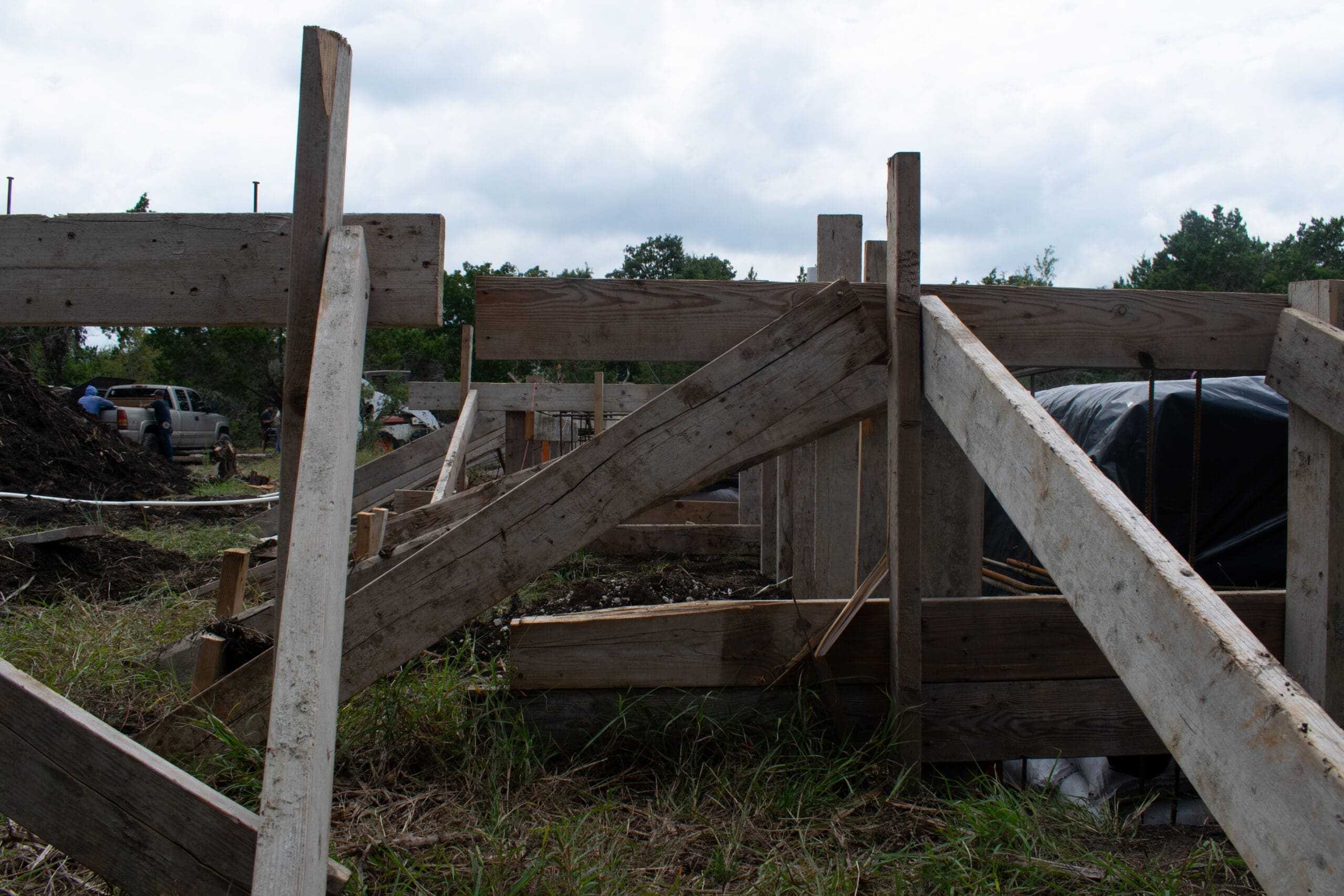
“How long does it take to build a custom home in Texas?” — it’s the first real question almost every client asks, usually before the land is even purchased. The honest answer: if you’re building a custom home in Texas, plan for 12 to 18 months from the start of design to the day you get your keys. That range accounts for most projects we see in the Hill Country. Larger homes, complex designs, or tricky site conditions can push that longer. A smaller, simpler build on a cleared, well-served lot can come in closer to twelve months. What nobody should do is count on six months and be surprised when that’s not realistic. Here’s a transparent breakdown of every phase — and what can speed things up or slow them down.
Phase 1: Design, Planning, and Permitting — 2 to 4 Months
Before a single shovel goes in the ground, there’s a substantial amount of work to do on paper. This phase is where your home actually gets designed, specified, and submitted for permit approval. It’s also the phase where most first-time custom home builders feel the most impatient — and where cutting corners has the most expensive consequences later.
Architectural Design and Plans
Working with your architect or designer to develop a full set of construction documents takes time. This isn’t just a floor plan sketch — it’s a complete set of drawings that covers structural engineering, electrical layouts, plumbing diagrams, mechanical design, and all the material and finish specifications that subcontractors need to bid and build accurately. Rushing this stage produces plans with gaps, conflicts, and change orders that cost far more during construction than the time saved would have been worth.
Expect four to eight weeks for a quality architectural set, depending on the complexity of the design and how quickly you make decisions on finishes and specifications.
Material and Finish Selections
One of the biggest time sinks in the design phase is client decision-making — and there’s no criticism implied in that. Custom homes involve hundreds of selections, from roofing and exterior materials to flooring, cabinetry, countertops, tile, fixtures, hardware, and paint. Some of these have long lead times. Certain custom cabinetry, imported tile, and specialty windows can take 12 to 16 weeks to manufacture and deliver. Making these selections early — ideally before construction starts — is one of the most effective ways to keep the build on schedule.
Permit Submission and Approval
Permitting timelines vary significantly by jurisdiction. In unincorporated Hays County, which covers much of the Dripping Springs and Wimberley area, permits are typically processed within four to six weeks for residential construction. Inside city limits or in jurisdictions with busier permit offices, this can stretch to eight to twelve weeks. Some Hill Country areas also require fire district review, septic permit approval, and environmental assessments before a building permit is issued.
We manage permit submissions as part of our process and know what each jurisdiction requires. If you’re building in Dripping Springs, Wimberley, or Driftwood, we can give you a realistic permitting timeline specific to your location during our initial conversations.
Phase 2: Site Preparation and Foundation — 4 to 10 Weeks
Once permits are in hand, the first physical work begins: clearing, grading, and preparing the site for foundation work. On acreage properties, this phase can involve significantly more work than on a finished lot in a subdivision.
Land Clearing and Grading
Hill Country land often has cedar, rock outcroppings, uneven terrain, and drainage patterns that require careful management before any building begins. Clearing trees and brush, rough grading the building pad and driveway, establishing erosion controls, and grading for proper drainage around the future structure are all part of this work. Properties with significant rock outcropping may require blasting or extensive rock saw cutting, which adds both time and cost.
Utilities: Well, Septic, and Electrical
On rural properties, establishing utilities — drilling a water well, installing a septic system, and running electrical service from the road — often happens in parallel with site grading. Well drilling in the Hill Country’s shallow limestone geology is generally straightforward, but depth to water and yield can vary. Septic system installation requires a separate permit and inspection process. These utility installations can add two to four weeks to the pre-foundation timeline if not started early.
Foundation Work
Hill Country soil and rock conditions mean most of our foundations are engineered specifically for the site. Post-tension slab foundations are common in Central Texas because they handle expansive clay soils and rocky subgrade better than conventional slabs. Foundation work — forming, steel or cable placement, inspection, pour, and cure — typically takes two to four weeks. Rocky soil conditions in some Hill Country areas can require additional time for excavation and preparation.
Phase 3: Framing and Dry-In — 8 to 12 Weeks
After the foundation cures (typically seven to ten days before framing loads are applied), the house starts to take shape fast. Framing is often the most visible phase of construction — the point where clients can finally walk through their rooms and get a feel for the actual scale of the space.
Wall and Roof Framing
A well-organized framing crew can frame most custom homes in two to four weeks, depending on the footprint, height, and complexity of the structure. Steep roof pitches, complex rooflines, and features like clerestory windows or dramatic ceiling heights add framing time. Once walls are up and roof trusses or rafters are installed, sheathing goes on the walls and roof deck.
Roof, Windows, and Doors
After sheathing, roofing underlayment and the finish roofing material — usually standing seam metal on our builds — are installed. Windows and exterior doors are set. Once these elements are in place, the home is “dried in” — protected from rain and ready for interior rough-in work. This is a significant milestone because it means interior work can proceed regardless of weather.
Phase 4: Rough-Ins — 4 to 8 Weeks
With the home dried in, the mechanical systems go in: plumbing rough-in, electrical rough-in, HVAC ductwork and equipment, and any low-voltage systems (structured wiring, security, audio/visual). This is also when spray foam or batt insulation is installed in the walls and attic before drywall begins.
Required Inspections
Multiple inspections are required during rough-in: framing inspection, plumbing rough-in inspection, electrical rough-in inspection, and insulation inspection (where applicable). Each inspection must be scheduled, passed, and documented before the next phase can proceed. In most Hill Country jurisdictions, inspectors are reasonably available, but scheduling windows do create small delays — typically two to five business days per inspection.
Long-Lead Items That Affect This Phase
Custom cabinetry, specialty hardware, stone or tile ordered from overseas sources, and appliances with long lead times need to be ordered early enough to arrive when needed. We create a procurement schedule at the start of every project to track these items and avoid the frustrating scenario of a home that’s otherwise ready for a fixture but waiting on a backordered item.
Phase 5: Drywall Through Finish Work — 10 to 16 Weeks
This is the phase where the home goes from looking like a construction site to looking like a home — and it takes longer than most people expect. There are a lot of sequential trades involved, and each one has to finish before the next can start.
Drywall
Drywall hanging, taping, mudding, and texturing typically takes two to three weeks. Multiple coats of joint compound need to dry between applications, and texture must be fully dry before paint. Rushing drywall finish is one of the most common causes of visible quality issues in new construction — we don’t rush it.
Paint and Trim
After drywall comes primer, paint, and then the installation of all interior trim: baseboards, door casings, window stools and aprons, crown molding where specified, built-in shelving, and stair railings. Trim work is highly skilled and time-consuming on a custom home. A quality trim carpenter working a large Hill Country home can take three to five weeks on this phase alone.
Flooring, Tile, and Cabinetry
These trades typically run somewhat in parallel in different areas of the house. Tile work in bathrooms, mudrooms, and utility areas. Hardwood or LVP flooring in living areas and bedrooms. Cabinetry installation in kitchens, bathrooms, and utility rooms. Each of these requires detailed coordination and careful sequencing — cabinets before countertops, tile floors before vanities, hardwood after HVAC is functioning to stabilize humidity. Our project management process sequences these carefully to avoid rework.
Countertops, Fixtures, and Final Finishes
After cabinetry is installed, countertop templates are measured and fabricated — which takes one to two weeks for stone. Plumbing fixtures, lighting, hardware, appliances, and mirrors follow. This is also when exterior finish work — stone veneer, siding, exterior trim and paint — is completed. A final punch list walk generates a written list of remaining items, which are completed before the certificate of occupancy inspection.
What Slows a Custom Home Build Down
Every builder who tells you their projects never have delays isn’t being fully honest with you. Here’s what actually causes schedule slippage on Hill Country custom home projects:
- Late selections by clients — Undecided on tile, cabinetry finish, or countertop material when those trades are ready to work is the most common cause of delays
- Long-lead material backorders — Custom windows, appliances, specialty tile, and cabinetry can have 12–20 week lead times; ordering early is critical
- Weather — Extended rain in spring delays grading and concrete work; extreme heat occasionally slows exterior crews in summer
- Permit delays — Especially in higher-volume permit offices, or when plan revisions trigger re-review
- Subcontractor scheduling — Skilled Hill Country trade contractors are busy; builds that are well-organized and respected by the GC attract better crews and better scheduling
- Design changes during construction — Changes after construction starts are the most expensive and schedule-impacting delays of all
How We Keep Your Build on Schedule
Communication and planning are the two things that actually control schedule. We maintain a detailed master schedule that’s updated throughout the project, and we share it with clients so they always know where things stand. We hold weekly on-site meetings during active construction phases and provide regular photo updates. When a delay is coming — and sometimes they are — we tell you early and discuss options, rather than waiting until it’s already a problem.
We also push hard on procurement. Getting selections made and orders placed before they’re urgently needed is the single most effective thing both builder and client can do to protect the schedule. Read more about our overall process in our post on the Ridge Rock approach from blueprint to move-in.
If you’re just starting to think about building, our post on what happens after you decide to build a custom home walks through the early steps in plain language. And if you’ve already started researching builders, our guide on how to choose the right home builder covers the questions you should be asking.
Frequently Asked Questions
How long does it take to build a custom home in Texas from start to finish?
For most custom homes in the Texas Hill Country, the realistic timeline is 12 to 18 months from the start of design through the certificate of occupancy. Simpler designs on prepared lots can come in close to 12 months. Large homes with complex architecture, extensive custom finishes, or challenging site conditions can take 18 to 24 months. The best way to get an accurate estimate for your specific project is to have a detailed conversation with your builder early in the planning process.
Does building on rural acreage take longer than building in a subdivision?
Generally, yes — primarily due to utility installation. Drilling a well, installing a septic system, and running electrical service to a rural property adds four to eight weeks that a subdivision lot with existing utilities doesn’t require. Site clearing and grading on raw land can also take longer than on a prepared lot. If you’re buying rural land to build on, factor this into your timeline planning.
What’s the most common cause of construction delays?
Late client selections and long-lead material backorders are the two most common causes of avoidable delays. Decisions about cabinetry, countertops, tile, and special-order windows need to be made well before those trades are ready to work. An experienced builder will give you a procurement schedule at the start of the project with specific decision deadlines. Following that schedule consistently is one of the most powerful things a client can do to protect their timeline.
Can I live on the property while my home is being built?
Many clients place an RV or temporary structure on the property during construction — and for rural acreage, this is practical. Check with us about access, utility tap connections for temporary power and water, and any county restrictions on temporary habitation. It’s generally easier on longer rural builds than in neighborhood settings where temporary living arrangements may be restricted by HOA or deed restrictions.
How does design complexity affect the timeline?
Significantly. A straightforward rectangular or L-shaped floor plan with standard ceiling heights, conventional rooflines, and stock finishes builds faster than a home with multiple roof planes, tall or vaulted ceilings, complex stone exterior detailing, and fully custom millwork throughout. Both types of homes can be beautiful — but a client who wants a more elaborate design should understand they’re trading time (and money) for that complexity.
How do I know if a builder’s timeline estimate is realistic?
Ask for a phase-by-phase breakdown, not just a total number. A builder who can tell you specifically how long each phase will take — and explain the assumptions behind those estimates — is more credible than one who gives you an optimistic total without supporting detail. Also ask about their current workload and how many active projects they’re managing. A stretched-thin builder will struggle to stay on schedule across multiple projects simultaneously. Call us at (512) 294-9579 and we’ll walk you through a realistic schedule for your specific project from the first conversation.
Ready to Start Your Project?
At Ridge Rock Builders, we specialize in custom homes, remodels, barns, shops, and casitas throughout the Texas Hill Country. Whether you’re still exploring your options or ready to break ground, we’d love to talk.
Get a free build estimate or call us at (512) 294-9579 to start the conversation.