

Knowing how to choose a home builder in Texas is one of the most important decisions you’ll make in the entire custom home process — and it’s one where getting it wrong costs you time, money, and a lot of stress. The right builder becomes a trusted partner who guides you from lot to move-in. The wrong one becomes a cautionary tale. Here’s how to evaluate your options and make a choice you’ll feel good about for years.
Start With Your Own Goals: What Kind of Home Are You Building?
Before you start interviewing builders, get clear on what you actually want to build. The type of home you’re envisioning shapes which builders are even worth talking to. A builder who does primarily spec tract homes isn’t the right fit for a fully custom Hill Country property on 10 acres. And a custom builder who works exclusively on $2M+ estates might not be the right match for a well-appointed but practical family home in the $600K range.
Custom vs. Semi-Custom
- Fully custom: You start with a blank slate — your lot, your floor plan, your finishes. Every decision is yours. This requires a builder who’s truly experienced at managing complex client-driven projects from scratch.
- Semi-custom: You start with proven floor plans and customize within a set range of options. Less decision fatigue, often faster timelines, but with constraints on how far you can deviate from the base designs.
At Ridge Rock Builders, we specialize in fully custom homes — meaning we work with you from your vision, not a catalog. If you want to see what that looks like in practice, our post on the Ridge Rock Builders approach from blueprint to move-in walks through exactly how we manage that process.
Evaluate Their Portfolio and Track Record
Every builder will tell you they do great work. The portfolio is where you find out if that’s actually true. When you’re reviewing a builder’s past projects, look for homes that are similar in scale, style, and complexity to what you want to build. A portfolio full of 2,000-square-foot starter homes doesn’t tell you much about a builder’s capability on a 4,500-square-foot custom build with an outdoor kitchen, pool, and detached casita.
What to Look For in a Portfolio Review
- Range of styles: Can they execute the aesthetic you want, or do all their homes look the same regardless of what the client asked for?
- Quality of finish work: Look at trim, tile work, cabinetry, and transitions between materials. These details reveal the quality standards a builder actually holds.
- Site variety: Have they built on properties like yours — rural acreage, sloped terrain, Hill Country lots with rock and cedar?
- Project complexity: Barns, shops, pools, casitas, guest houses — if you want these, make sure the builder has done them before.
You can browse our completed projects at the Ridge Rock Builders project gallery to see the range of homes we’ve built across the Texas Hill Country.
Read Reviews and Ask Real Clients
Online reviews are useful, but direct conversations with past clients tell you far more. Ask the builder for a reference list — and then actually call them. Most people who’ve been through a custom home build have plenty of opinions, both positive and constructive, and they’re usually willing to share them if you ask the right questions.
Questions Worth Asking Past Clients
- Did the project come in close to the original budget, and if not, why?
- Was the timeline accurate? Were there significant delays, and how were they handled?
- How was communication throughout the project? Did you feel kept in the loop?
- Were issues resolved quickly, or did things get ignored or pushed off?
- Would you build with this builder again?
For online reviews, check Google, Houzz, and the Better Business Bureau. Pay attention to how the builder responds to any negative reviews — that tells you a lot about how they handle problems. For more on what separates the best builders from the rest, our post on why our homes stand the test of time in the Hill Country covers the construction standards we hold ourselves to.
Assess Communication Style and Transparency
A custom home build typically runs 10–18 months. You’ll be in regular contact with your builder throughout that entire period. If communication is difficult, unclear, or one-sided in the initial conversations, that problem gets worse once construction is underway and there are real decisions to make under time pressure.
What good communication looks like from a builder:
Signs of Strong Builder Communication
- They return calls and emails promptly — even before you’ve signed a contract. If they’re hard to reach when they’re trying to win your business, it won’t improve after.
- They give you straight answers — not vague estimates or “it depends” on everything. Good builders have opinions about what works and what doesn’t, and they share them.
- They’re transparent about budget — including what’s included, what’s an allowance, and where costs could go higher if selections change.
- They explain the process — and set realistic expectations about timelines, permit processes, and decision points.
- They welcome site visits — you should be able to visit your project in progress and ask questions without feeling like you’re in the way.
Understand Their Approach to Quality and Materials
Not all construction is equal, and the gap between builders who cut corners and those who don’t isn’t always obvious until years after move-in. Ask specifically about the materials and methods used for foundations, framing, insulation, roofing, and weatherproofing — these are the structural decisions that determine long-term performance.
Quality Indicators Worth Discussing
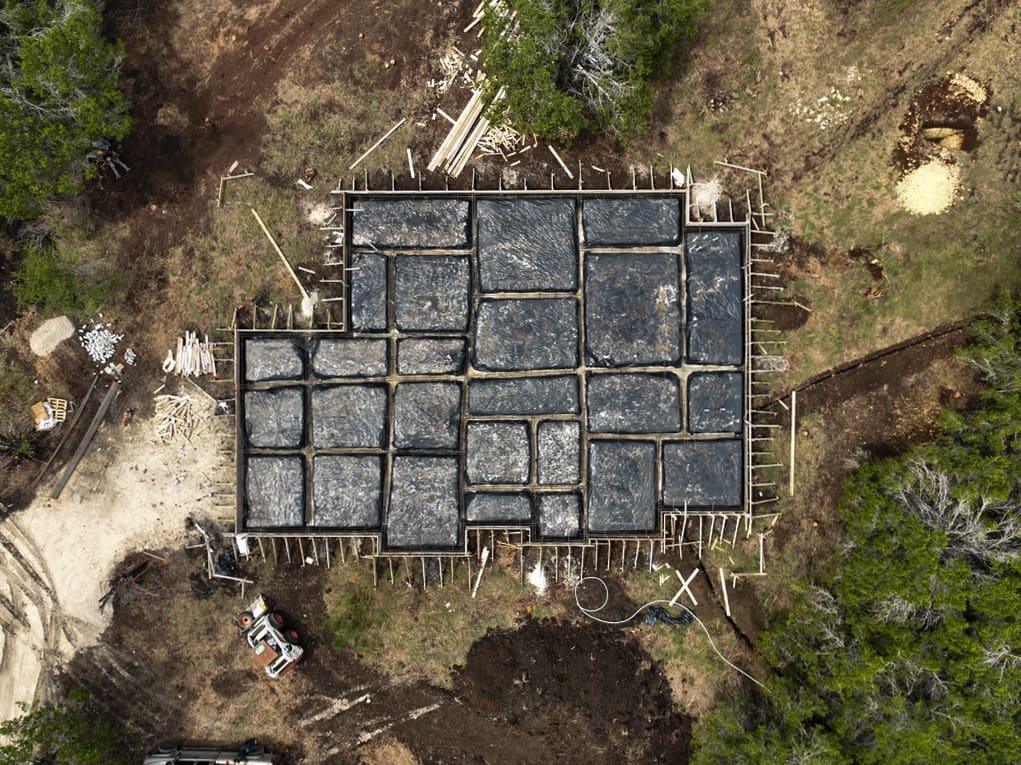
- Foundation type and preparation: In Central Texas, with our expansive clay soils, foundation engineering matters a great deal. Ask what post-tension or pier-and-beam approach they use and why.
- Insulation specifications: Spray foam, blown-in, or batt? Where are the air-sealing details? This has a direct impact on energy bills and comfort in Texas heat.
- Framing and sheathing: Are they using engineered lumber where appropriate? OSB or plywood sheathing? How is the house wrapped for moisture?
- Subcontractor relationships: Does the builder have consistent trade partners they work with repeatedly, or are they using whoever’s cheapest this week?
If you’re building in Dripping Springs, Lakeway, or other Hill Country communities, the terrain and climate present specific construction challenges. A local builder who’s worked extensively in those areas knows those challenges firsthand.
Review Warranty Coverage and Post-Construction Support
A builder who stands behind their work offers a warranty — and more importantly, they actually honor it. Find out specifically what’s covered and for how long. Texas law requires a minimum one-year workmanship warranty and a two-year warranty on mechanical systems, with a 10-year structural warranty. Reputable builders typically exceed these minimums.
What to Ask About Warranty
- What is covered, and what are the exclusions?
- Is the warranty handled by the builder directly, or through a third-party warranty company?
- How quickly do you respond to warranty claims?
- What does the warranty handover process look like at closing?
The first year after move-in is when most minor issues surface — settling, minor cracks, HVAC adjustments, door alignment. A builder who does a 30-day and 11-month walk-through as part of their process is one who’s thinking about the relationship beyond the day they hand you the keys.
Get a Detailed, Transparent Estimate
Cost is always part of the conversation, and any builder who won’t give you a detailed, itemized estimate is one to be cautious about. Vague “per square foot” numbers without specifications don’t mean much — the cost per square foot to build a home varies enormously based on finishes, site conditions, structural design, and what’s actually included.
A good estimate should break out:
- Site work and foundation
- Framing, roofing, and exterior
- Mechanical systems (plumbing, electrical, HVAC)
- Interior finishes with clear allowances identified
- Permits and fees
- Builder overhead and margin (this should be transparent)
Allowances are a common area where estimates get misleading — a builder can show a low number by using unrealistically low allowances for things like cabinets, flooring, and fixtures, only for those costs to balloon when you make actual selections. Ask directly: “What does this allowance buy, and is that realistic for what I’ve described wanting?” You can start the conversation with us at any time by using our free build estimate tool.
Frequently Asked Questions About Choosing a Home Builder in Texas
How do I know if a builder is licensed and insured in Texas?
In Texas, residential builders are not required to hold a state contractor’s license (unlike many other states), but they must be registered with the Texas Residential Construction Commission’s successor system and carry general liability and workers’ compensation insurance. Ask for proof of insurance directly, and verify they’re registered. Also confirm that key subcontractors — electricians, plumbers, HVAC — hold their required state licenses.
How many builders should I interview before making a decision?
Talking to at least three builders is a reasonable baseline. More than five and the process gets overwhelming. Use the first conversations to narrow quickly — if a builder is dismissive, uncommunicative, or can’t explain their process clearly, move on. Spend deeper time with two or three finalists, ask for references, visit active job sites if possible, and compare proposals side by side on an apples-to-apples basis.
What’s the biggest mistake people make when choosing a builder?
Going with the lowest bid without understanding why it’s lower. A significantly lower bid usually means lower-quality materials, less experienced subcontractors, unrealistically low allowances that will balloon later, or missing scope items that become change orders during construction. Price matters, but the gap between a bid that’s 10% lower and one that delivers what you actually want is often a false economy.
Should I hire an architect separately, or does my builder handle design?
It depends on the builder’s model. Some custom home builders like Ridge Rock work with a design-build approach, helping clients develop plans with a preferred architect or designer as part of the overall project. Others require you to bring a completed set of plans. If you don’t have plans yet, ask early in the process — some builders have in-house design capacity or strong preferred architect relationships that simplify coordination.
Is it better to use a local builder or a large regional company?
For custom homes in the Texas Hill Country, a local builder with deep knowledge of the specific area — local subcontractors, permit processes, soil conditions, utility providers — almost always delivers a better outcome than a large regional builder applying a standardized approach. Local builders also tend to have more direct owner involvement in each project, which matters when decisions need to be made quickly and correctly.
How long does it take to build a custom home in Central Texas?
Most custom homes in the Dripping Springs, Wimberley, and surrounding Hill Country area run 12–18 months from permit approval to certificate of occupancy. More complex homes or projects with significant site work can run longer. The pre-construction phase — design, selections, permits — can add several months before construction begins. For a more detailed breakdown, read our guide on what to expect when you decide to build a custom home.
Ready to Start Your Project?
At Ridge Rock Builders, we specialize in custom homes, remodels, barns, shops, and casitas throughout the Texas Hill Country. Whether you’re still exploring your options or ready to break ground, we’d love to talk.
Get a free build estimate or call us at (512) 294-9579 to start the conversation.