
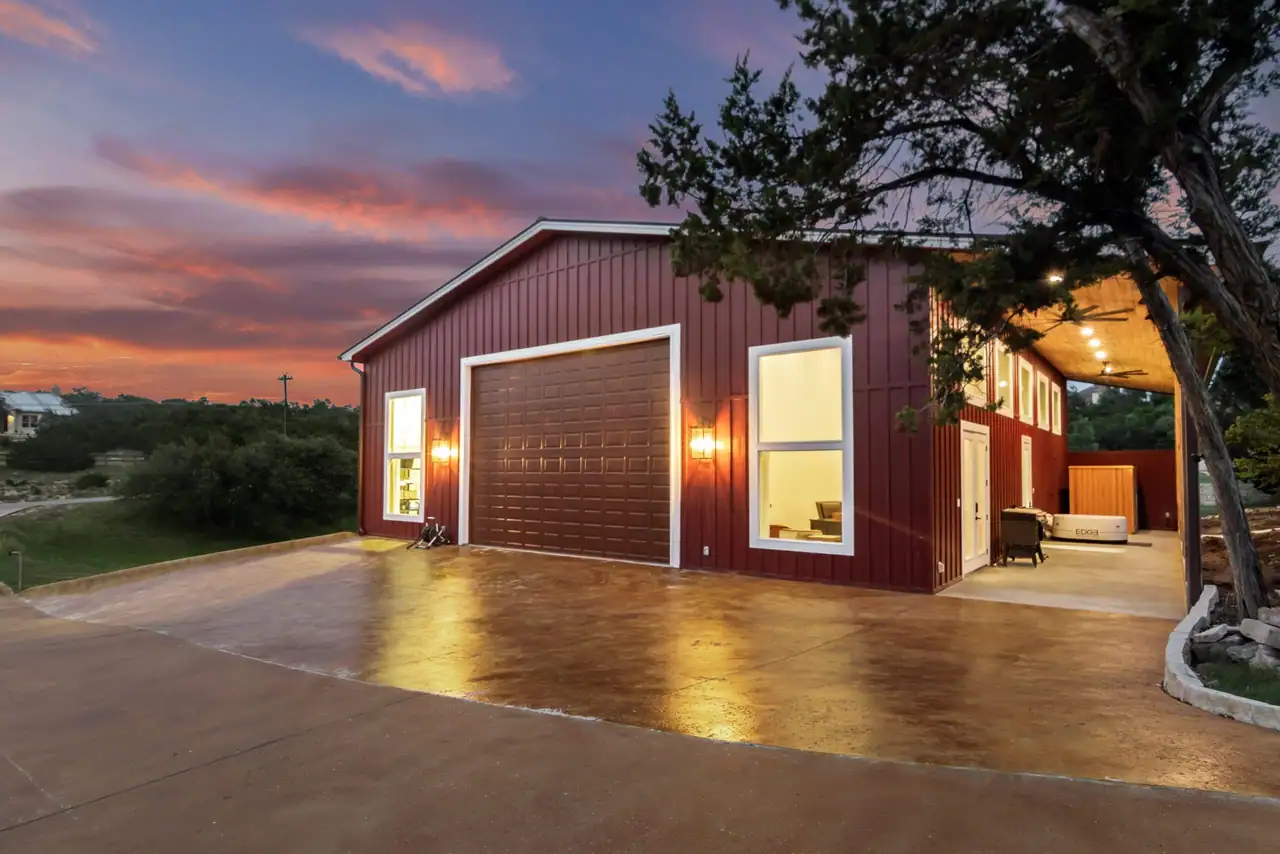
Buying land in the Texas Hill Country is one of the most exciting steps toward building your dream home — and one of the most important decisions you’ll make in the entire process. The right piece of land sets everything else up for success. The wrong one can cost you tens of thousands of dollars in unexpected site prep, or worse, leave you with a lot you can’t legally build on at all. Here’s what you need to know before you write that check.
Where to Look When Buying Land in the Texas Hill Country
The Hill Country market stretches across a wide swath of Central Texas, from the outskirts of Austin all the way west toward Fredericksburg. That gives buyers a lot of options — but not all land is created equal when it comes to building.
Some of the most popular areas we work in include:
- Dripping Springs — One of the fastest-growing areas in Texas, with a mix of subdivisions, acreage tracts, and established neighborhoods. Our Dripping Springs custom home team knows this market well.
- Spicewood — More open acreage, lower density, and a slightly more rural feel just west of Lake Travis. Great for buyers wanting elbow room. See what we build in Spicewood.
- Wimberley and Driftwood — Beloved by buyers who want the classic Hill Country experience: cedar, limestone, wildlife, and wide-open skies.
When evaluating locations, think about more than just scenery. Consider proximity to Austin for your commute, school districts, emergency services access, and how far you’re willing to drive for groceries and medical care.
Lot Size: How Much Land Do You Actually Need?
The answer depends on how you plan to use the property. A half-acre lot in a Dripping Springs neighborhood is very different from a 10-acre tract off a county road. Here’s a general framework:
- Under 1 acre: Usually part of a platted subdivision. You’ll likely connect to city water and sewer. Less site work, but more restrictions.
- 1–5 acres: The sweet spot for many buyers. Enough room for a home, shop, and outdoor living without the maintenance burden of larger tracts. May require a septic system.
- 5+ acres: Maximum privacy and flexibility. Budget more for utility hookups, road access, and site prep.
One thing buyers often overlook: buildable area is not the same as total acreage. A 5-acre lot with steep terrain, a creek running through the middle, and a flood plain designation might have less than an acre of truly buildable land. Always evaluate the usable footprint, not just the total square footage.
Deed Restrictions, HOA Rules, and Zoning
Before you fall in love with a piece of property, pull the deed restrictions and review any HOA documents. In the Hill Country, these vary wildly from property to property — some neighborhoods have no restrictions at all, while others are quite specific about minimum square footage, exterior materials, accessory structures, and even livestock.
Key things to check:
- Minimum home size requirements
- Setback requirements from property lines and roads
- Whether barns, shops, casitas, or ADUs are permitted
- Restrictions on short-term rentals (important if you plan to Airbnb the property)
- Architectural review committee requirements and processes
County-level zoning is often more permissive in rural Hays and Travis County, but deed restrictions imposed by a developer can be far more restrictive than county code. Your title company and real estate attorney will review these, but it helps to read them yourself before you get emotionally attached to a property.
Water and Utilities Access: Don’t Assume Anything
Water availability is one of the most critical — and most frequently misunderstood — factors when buying land in the Texas Hill Country. In the Austin suburbs, municipal water and sewer are often available. But venture even a few miles outside city limits and you’re typically looking at a private water well and a septic system.
Water Sources to Evaluate
- Municipal/public water: Available in incorporated areas and some ETJ (Extraterritorial Jurisdiction) zones. Most predictable cost and quality.
- Private water well: Common on rural acreage. Drilling costs range from $8,000 to $20,000+ depending on depth. Ask if neighboring properties have wells and what depth they drilled to.
- Water district service: Some areas are served by a water supply corporation (WSC) — you may need to apply for a tap and pay a connection fee.
Electricity and Other Utilities
- Check how far the nearest electric utility line is. Long service extensions can cost $5,000–$20,000+.
- Natural gas is rarely available on rural tracts — propane is the standard for cooking and heating.
- Internet connectivity varies dramatically; check fiber, fixed wireless, and satellite options for the area.
The key message here: never assume a lot has utility access without verifying it. Utility costs can swing your total budget significantly. We address all of this in detail in our post on septic, well water, and site prep utilities.
Topography, Soil, and Flood Zone Considerations
The Hill Country’s dramatic terrain is part of what makes it beautiful — and part of what makes it challenging to build on. Rocky cedar-covered hillsides, limestone outcroppings, and creek bottoms all come with their own engineering considerations.
Reading the Land
- Slope: A gentle slope is manageable; a steep hillside requires more cut-and-fill work, retaining walls, and engineered foundations — all of which add cost.
- Rock: Limestone is everywhere in the Hill Country. Rock excavation costs more than soil excavation, but limestone foundations are incredibly solid once you’re through it.
- Cedar and brush: Land clearing costs vary based on density. Budget $500–$3,000 per acre for moderate clearing, more for heavy brush.
Flood Zone Status
Always check FEMA flood zone maps before purchasing. Properties in the 100-year flood plain (Zone A or AE) face significant restrictions on where you can build and will require flood insurance. Creek-adjacent lots are particularly common in the Hill Country — and many of them carry at least some flood zone designation on part of the property.
Soil Testing
A soil and geotechnical report (sometimes called a geotech report) will identify whether the soil can support the type of foundation you’re planning, whether there are any expansion issues (expansive clay soil is common in some Hill Country areas), and whether there are bedrock conditions that affect septic system placement. Budget $800–$2,500 for a thorough soil test, and consider it money well spent.
Work With a Builder Before You Buy
This is probably the single most valuable piece of advice we can give: involve your builder before you make an offer. Most buyers find their land first, then find their builder. But a builder who knows the area can walk a lot with you, flag problems you’d never catch on your own, and give you a realistic picture of what it will cost to develop.
At Ridge Rock Builders, we walk potential build sites with clients as part of our early-stage consultation. We’ve helped clients avoid lots that looked beautiful on paper but had $80,000 in hidden site prep costs. We’ve also helped clients move forward confidently on lots others had passed on because they understood how to work with the terrain.
When you’re ready to get serious about a lot, start with a free build estimate. We’ll talk through the site, the home you’re envisioning, and what you’re likely to spend before you commit to anything.
A Quick Pre-Purchase Checklist
Before you sign, make sure you’ve checked these boxes:
- Reviewed deed restrictions and HOA documents
- Verified water source and confirmed availability (well, WSC, or municipal)
- Confirmed electric service distance from the nearest utility
- Pulled FEMA flood zone maps for the property
- Walked the property with a builder or civil engineer
- Ordered a soil and geotechnical report (or planned for one)
- Confirmed septic feasibility with the county
- Checked road access and legal easements
Frequently Asked Questions: Buying Land in the Texas Hill Country
How much does land cost in the Texas Hill Country?
Land prices vary significantly by location, size, and amenities. Close-in tracts near Dripping Springs or Bee Cave typically run $50,000–$150,000+ per acre for developed land in a subdivision. Raw acreage farther from Austin can be found for $15,000–$40,000 per acre in some areas, though prices have risen substantially in recent years. Always get a current market analysis from a local real estate agent who specializes in land.
Do I need a perc test before buying Hill Country land?
A percolation test (perc test) determines whether the soil can support a conventional septic system. If you’re buying a lot that doesn’t have access to a municipal sewer system — which is most rural Hill Country properties — you should get a perc test or at minimum verify that the county has pre-approved the lot for septic before purchasing. Some lots fail perc tests and require alternative (more expensive) septic systems.
Can I build anything I want on rural Texas land?
Not necessarily. Even outside city limits, your property is subject to county regulations, any deed restrictions in your title, and potentially the rules of an HOA or Property Owners Association (POA). Hays County and Travis County both have their own regulations for on-site sewage, setbacks, and road access. Always review the applicable restrictions before assuming you have free rein.
Is it better to buy land in a subdivision or raw acreage in the Hill Country?
Both have pros and cons. Subdivision lots typically have utilities already stubbed in, paved roads, and established deed restrictions — which provides more certainty for buyers. Raw acreage offers more freedom and often more privacy, but typically requires more upfront investment in site prep and utilities. The right choice depends on your budget, timeline, and what kind of lifestyle you’re building toward.
How soon should I bring a builder into the land search process?
As early as possible — ideally before you make an offer. A builder familiar with the Hill Country can walk a lot with you and identify site challenges that aren’t visible in a listing photo. Unexpected rock, drainage issues, difficult utility access, or challenging topography can add tens of thousands of dollars to a build. An early builder consultation can save you from costly surprises down the road.
What is the ETJ and does it affect what I can build?
ETJ stands for Extraterritorial Jurisdiction — the unincorporated area outside a city’s limits where the city has limited regulatory authority. In the ETJ of cities like Dripping Springs, Austin, or Bee Cave, you may be subject to certain city regulations (like subdivision rules or road standards) even though you’re technically in the county. Check with the relevant city and county planning offices to understand exactly which rules apply to any specific property.
Ready to Start Your Project?
At Ridge Rock Builders, we specialize in custom homes, remodels, barns, shops, and casitas throughout the Texas Hill Country. Whether you’re still exploring your options or ready to break ground, we’d love to talk.
Get a free build estimate or call us at (512) 294-9579 to start the conversation.


