

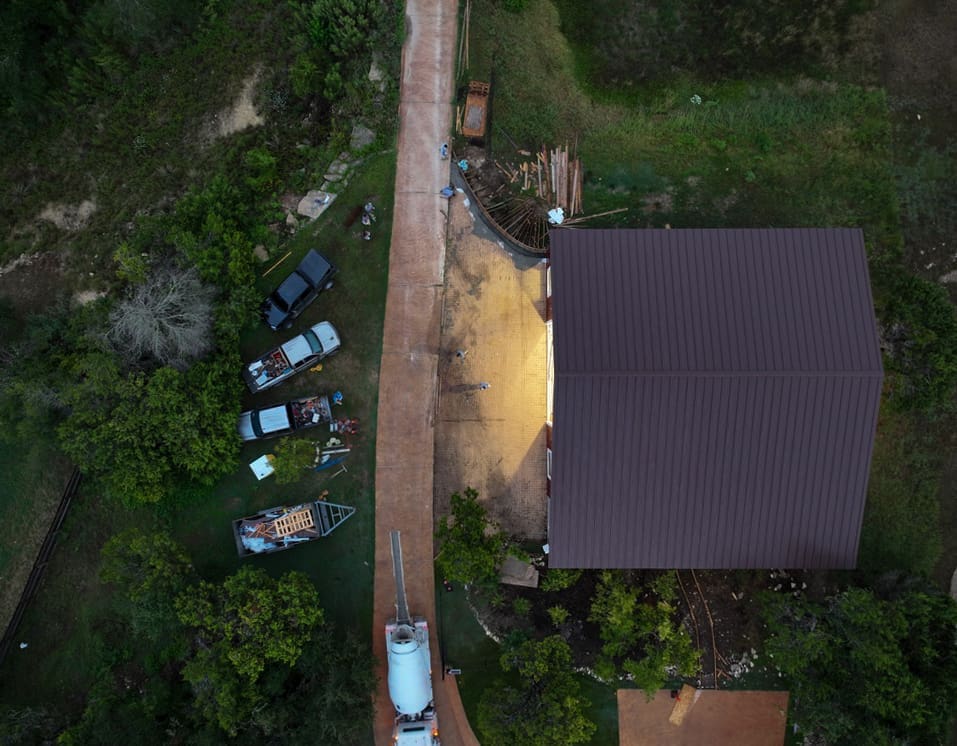
So you’ve made the decision: you’re going to build a custom home in Texas. That’s a big call, and the right one for a lot of people — but the next question most folks run into is figuring out exactly what the steps to building a custom home look like from where they’re standing right now to moving day. The process is more structured than it might seem from the outside, and understanding each phase helps you stay in control, make good decisions, and avoid the surprises that derail budgets and timelines. Here’s the roadmap, straight from the builder’s perspective.
Step 1: Get Your Vision and Budget Grounded Before Anything Else
The most common mistake people make early in the custom home process is jumping straight to floor plans before they’ve done the harder thinking. Vision and budget have to align before design work begins — otherwise you’re creating plans for a home you can’t afford to build, which means expensive redesigns later.
Define What You Actually Need
Start with the fundamentals. Think through:
- How do you actually live? Single-story vs. two-story? Open plan or defined rooms?
- What are the non-negotiables? A home office, dedicated guest quarters, a garage workshop, an outdoor kitchen?
- Is this a 5-year house or a forever house? That changes how you think about aging-in-place features, room configurations, and long-term maintenance decisions.
- What do you hate about where you live now? Build in the solutions from the start.
Set a Realistic Budget
Land, construction, permits, utility connections, landscaping, and a contingency fund — your total project budget needs to account for all of it, not just the construction contract. In the Texas Hill Country, rough construction costs for a custom home run $200–$350+ per finished square foot depending on finishes and site conditions, but that number alone doesn’t tell the full story. Use our free build cost estimator to start building a realistic picture, and read our detailed breakdown on custom home financing before you commit to any numbers.
Step 2: Find Your Land Before You Design Your Home
For most people building a custom home, the lot search and the home design process happen in parallel — but the land should really come first, or at least shape the design early on. A home design that works beautifully on a flat suburban lot may need significant modification on a sloped Hill Country acreage property with rock outcroppings and a creek setback.
What to Evaluate When Choosing Land
- Utilities: Is there city water and sewer, or will you need a well and septic system? This has significant cost and permitting implications.
- Access: Road frontage, easements, and driveway grades all matter — especially on rural acreage properties.
- Topography: Steep grades add cost to site work and foundations. They can also create dramatic views and unique design opportunities.
- Zoning and deed restrictions: HOA rules, setbacks, maximum impervious cover, septic setback requirements — confirm all of these before you close on any lot.
- Soil conditions: In Central Texas, expansive clay soils require engineered foundations. A soil test before purchase can reveal what you’re working with.
If you’re building in Dripping Springs, Spicewood, or Wimberley, the terrain and utility availability vary significantly even within the same zip code. A local builder who knows these areas can help you evaluate a lot before you buy it — that’s a conversation worth having early.
Step 3: Assemble Your Team and Get Into Design
The building process works best when the key players — builder, architect or designer, and sometimes an interior designer — are in conversation with each other from the beginning rather than working in sequence. When the architect designs without input from the builder, and the builder prices without input from the interior designer, you end up with a set of plans that looks great on paper but hits budget problems the moment you start pricing materials and finishes.
The Core Team You Need
- Builder/general contractor: The person responsible for managing the entire construction process, subcontractors, schedule, and budget. Choose this person first — they should have input into the design.
- Architect or designer: Translates your vision and site constraints into working construction documents. Some builders have strong preferred architect relationships; others work in a design-build model.
- Interior designer (optional but valuable): Helps with finish selections, furniture planning, and making the interior cohesive. Can save money by preventing costly selection changes during construction.
- Structural engineer: Required for foundation design, especially on challenging Hill Country sites with rock, slope, or expansive soils.
At Ridge Rock Builders, we walk every client through our full process for bringing these pieces together — read more about that in our post on our approach from blueprint to move-in.
Step 4: Permits, Approvals, and Pre-Construction Prep
Once your design is complete and construction documents are ready, the permit process begins. This phase requires patience — permit timelines vary significantly by jurisdiction and can range from a few weeks in some areas to several months in others, particularly for properties in the ETJ (extraterritorial jurisdiction) of a city or in areas with watershed or environmental review requirements.
What Happens During Pre-Construction
- Building permit application: Submitted to the city or county with full construction drawings
- Septic/well permits: If the site requires a private well or septic system, these are separate permits with their own review processes
- HOA/architectural review: Many communities in the Dripping Springs and Hill Country area have architectural review requirements; get these approvals in parallel with the building permit
- Utility coordination: Scheduling electrical, gas, and water service connections with the relevant providers
- Material lead time orders: Windows, doors, cabinets, and other long-lead items are often ordered during the permit phase so they’re not holding up construction later
Step 5: Site Work and Foundation
The permit is approved, the team is mobilized, and construction begins. The first physical work on site is clearing, grading, and preparing for the foundation — often the most consequential phase of the entire build.
What Happens During Site Prep and Foundation
- Land clearing: Trees, brush, and rock are cleared to the building envelope. In the Hill Country, rock excavation can be a significant cost variable depending on the site.
- Rough grading: The site is shaped for drainage, driveway, and building pad. Getting drainage right at this stage prevents serious problems down the road.
- Utility rough-ins: Water, sewer (or septic), electrical, and gas connections are stubbed in before concrete is poured
- Foundation pour: Most Central Texas custom homes use post-tension slab foundations engineered specifically for the site’s soil conditions. Curing typically takes a week before framing begins.
Step 6: Framing Through Interior Finishes
Once the foundation is cured and inspected, construction moves quickly through framing, mechanical rough-ins, and into finishes. This is the phase where the home visibly takes shape — and where a lot of important decisions get made in real time.
The Construction Sequence
- Framing: Walls, floors, and roof structure are erected. The footprint of every room becomes real and walkable — this is when most clients get genuinely excited about the project.
- Roof and windows: The home is “dried in” — roofing and exterior openings are closed up so interior rough-in work can proceed regardless of weather
- Mechanical rough-ins: Plumbing, electrical, HVAC ducts, and any low-voltage or smart home wiring are installed while walls are open. This is the time to confirm all outlet locations, fixture placements, and any smart home infrastructure you want built in.
- Inspections: Local building inspectors review framing and each rough-in system before walls are closed
- Insulation and drywall: Walls are insulated, closed, taped, and finished for paint
- Interior finishes: Painting, flooring, cabinetry, tile, countertops, fixtures, and hardware are installed in sequence
If you’ve incorporated smart home technology into your build plan, now is the time those systems get installed. For more on planning that ahead of time, see our guide on incorporating smart technology into your Central Texas custom home.
Step 7: Final Inspections, Punch List, and Move-In
As construction wraps up, the final inspection phase begins. This involves both the official building inspections required for a Certificate of Occupancy (CO) and the client walkthrough process where you review everything in detail before signing off.
The Closing Sequence
- Final building inspection: The city or county inspector confirms all systems and construction details meet code requirements
- Client walkthrough: You walk the completed home with your project manager and document any items that need attention — this is called the punch list
- Punch list completion: Items are addressed, typically within a few weeks of the walkthrough
- Certificate of Occupancy issued: The official sign-off that the home is legally habitable
- Keys and handover: The home is yours
The post-move-in period matters too. In the first few months, minor settling items often appear — a door that needs adjustment, some caulk that needs attention, minor drywall cracks from thermal movement. A quality builder has a defined process for addressing these under warranty. Ask about it before you sign a contract.
Frequently Asked Questions About Building a Custom Home in Texas
How long does it take to build a custom home in Central Texas?
Most custom homes in the Hill Country take 12–18 months from permit approval to move-in. Add 3–6 months for the pre-construction phase — design development, selection, and permitting — and you’re typically looking at 15–24 months from the time you engage a builder to the time you have keys. Larger or more complex homes, or projects with challenging site conditions, can take longer.
What’s the biggest budget risk in a custom home build?
Change orders during construction. Every time you change a decision that’s already been priced or installed, it costs more than the original decision would have. The best way to control this is to make all your selections — tile, cabinets, countertops, fixtures, flooring — before construction begins, not in the middle of it. A good builder builds time into the pre-construction process specifically for this.
Do I need to own my land before engaging a builder?
Not necessarily. Many clients start conversations with us before they have a lot — and that’s often the right approach, since we can help evaluate a property’s buildability before you commit to buying it. That said, you’ll need land secured before design can be fully completed and permitted, since the design needs to be specific to the site.
What’s included in a construction contract?
A solid construction contract covers the scope of work, specifications and included finishes, allowances for items not yet selected, total contract price and payment schedule, timeline and milestone dates, change order process, warranty terms, and dispute resolution procedures. Read it carefully. Ask questions about anything that’s unclear. Be especially attentive to allowance amounts and what happens when selections exceed them.
How do I finance a custom home build in Texas?
Most custom home builds are financed with a construction loan that converts to a permanent mortgage at completion. These are different products from a standard home purchase mortgage — the approval and draw process is more involved. Your builder’s familiarity with construction lenders in the area can be valuable here. Read our full guide on custom home financing for a detailed breakdown.
Can I live in my current home during the build?
Yes, and most clients do. Building a new custom home while living in your current house or rental gives you flexibility on timing — you don’t have to rush the build or make compromised decisions under time pressure. The risk is if your current lease or sale timeline creates pressure. Plan your timing early and keep some buffer in your move-out date expectations.
Ready to Start Your Project?
At Ridge Rock Builders, we specialize in custom homes, remodels, barns, shops, and casitas throughout the Texas Hill Country. Whether you’re still exploring your options or ready to break ground, we’d love to talk.
Get a free build estimate or call us at (512) 294-9579 to start the conversation.