
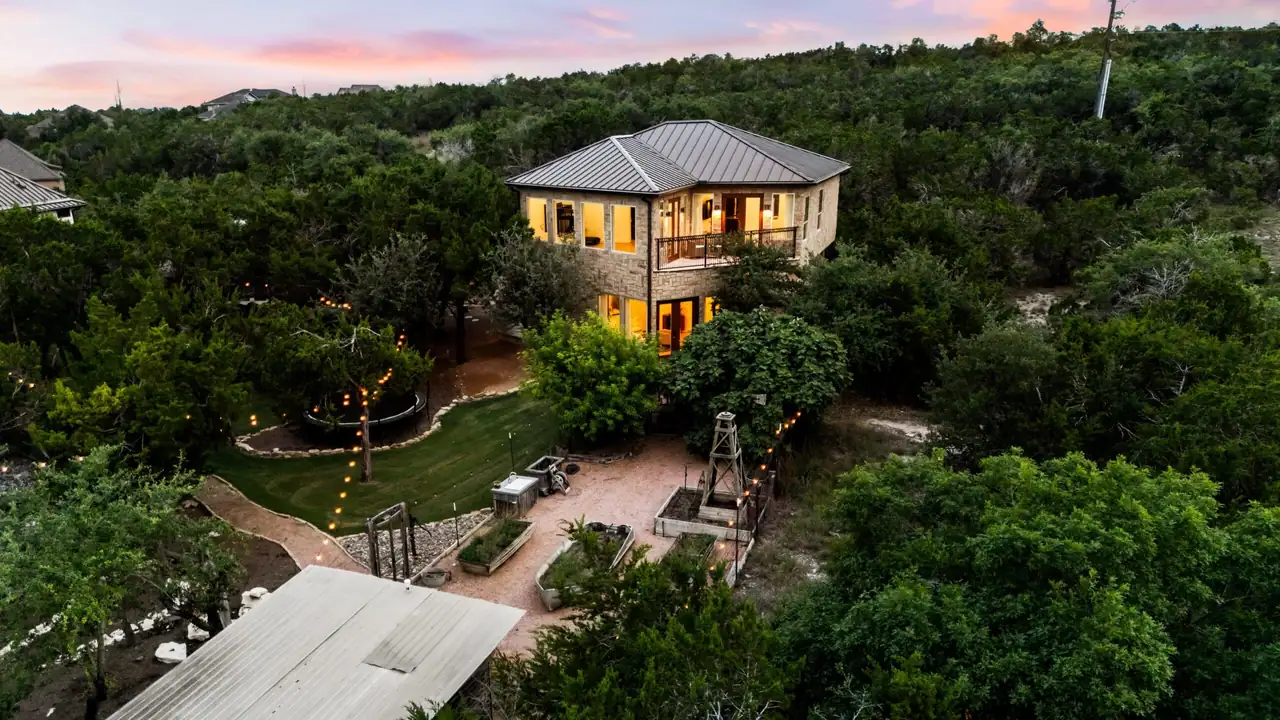
The idea of seamlessly blending indoor and outdoor living in a Texas custom home sounds like a design magazine concept — until you live through a July afternoon in the Hill Country and realize that “seamless” needs to include some serious engineering. Done right, an outdoor living space in Central Texas becomes one of the most-used rooms in your house, usable for 8–9 months of the year and genuinely transformative for how you entertain and relax. Done wrong, it’s a beautiful porch that nobody wants to sit on past 4 PM from May through September.
Orientation: The Decision That Sets Everything Else Up
Before you think about what the outdoor space looks like, you need to think about where it faces. Orientation is the single most important decision in Texas outdoor living design, and it’s determined at the time you site the home.
The Best and Worst Exposures
South and east-facing outdoor spaces work well in Texas. Morning sun from the east is pleasant and not intense. South-facing porches benefit from the shade created by deep roof overhangs during the high summer sun angles, while still getting winter sunlight when the sun sits lower in the sky.
West-facing outdoor spaces are the challenging ones. Afternoon sun from the west is the most intense solar exposure in a Texas summer, and no ceiling fan makes up for direct late-afternoon heat and glare. If your site’s best views face west — which is often true on hilltop properties — you solve for it through other means: deeper overhangs, shade sails or pergola structures, motorized roll screens, and strategic tree planting.
If you’re working with a hilltop lot in Spicewood or Wimberley where the Hill Country view faces west at sunset, we can design for it. But it takes more architectural and shading investment than an east or south exposure.
Designing the Openings That Connect Inside to Outside
The connection between the interior of the home and the outdoor space is where indoor-outdoor design either succeeds or fails as a concept. Sliding glass doors are fine. But multi-slide or pocket door systems that open an entire wall are transformative.
Multi-Slide and Pocket Door Systems
A multi-panel sliding door system — where 3, 4, or even 5 panels stack to one side and essentially eliminate the wall — creates a genuine continuity between the interior and exterior. When they’re open on a pleasant October evening, you stop thinking about where “inside” ends and “outside” begins. The great room and the porch become one space.
Key specifications to get right on these systems:
- Flush or low-profile thresholds that manage weather infiltration without creating a trip hazard
- Low-E glass that reduces heat transfer without a green or blue tint that changes how interior colors read
- Hardware that operates easily — panels this large get heavy, and smooth gliding is worth specifying
- Proper structural header design — these openings are large and require engineered framing
Making Covered Porches Actually Comfortable
A covered porch is only useful in Texas if it’s designed for Texas conditions. Most porches are too shallow, too poorly ventilated, and too exposed to late afternoon sun to be comfortable from May through September. Here’s what changes that.
Porch Depth
Ten feet is the absolute minimum depth for a functional covered porch. At ten feet, you can fit a seating arrangement and still feel like you’re protected from rain. Twelve feet is much better, and fifteen feet allows for a genuine outdoor dining table with a comfortable seating area beyond it. Porches under ten feet deep feel cramped and don’t provide adequate shade for the interior windows behind them.
Ceiling Fans and Air Movement
Outdoor-rated ceiling fans are non-negotiable on Texas porches. Specify fans with enough airflow for the square footage — don’t undersize them to save money. Space them so they provide overlapping coverage across the full porch depth, and put them on separate switches from the porch lighting so you can run fans without lights on bright days. Damp-rated fans handle the humidity; wet-rated fans are required if the fan is exposed to direct rain.
Roof Overhangs and Shade Layers
Deep structural overhangs on the porch roof are your first line of defense against solar gain — they block direct sun from entering the covered space and from hitting the exterior glass doors during the hottest part of the day. Motorized roll screens are the second layer: they block low-angle sun and wind-driven rain while still allowing airflow when partially raised. For partially covered areas like pergolas, shade sails or retractable shade cloth can provide flexibility. You can read more about our approach to creating the ultimate Texas outdoor kitchen alongside these porch design principles.
Outdoor Kitchens That Get Used Year-Round
An outdoor kitchen on a Texas property isn’t a luxury — it’s a genuinely practical addition that extends your living and entertaining space for most of the year. The design decisions that determine whether it gets used constantly versus occasionally are mostly about practicality, not aesthetics.
Essential Outdoor Kitchen Elements
- A properly vented grill: Venting a gas grill into a covered structure is a code requirement and a safety necessity — don’t skip it or do it as an afterthought
- Real counter space: Two feet of counter on each side of the grill is a minimum; more is always better for plating, holding dishes, and actually having a functional prep area
- Under-counter refrigeration: Position the fridge out of direct western sun and spec a unit rated for outdoor use with ambient temperatures up to 110°F — standard residential units fail quickly outdoors in Texas summers
- A sink with hot and cold water: An outdoor hand sink is both practical and code-required if you have a commercial-style grill in many jurisdictions; hot water makes it actually useful
- Trash and recycling storage: A pull-out drawer for a trash can keeps the porch tidy and protects from insects and wildlife
For clients who love pizza nights or wood-fired cooking, a gas or wood-burning outdoor oven is a fantastic focal point that turns the outdoor kitchen into a genuine gathering destination. We’ve incorporated these into several builds in Driftwood and Dripping Springs where clients do significant outdoor entertaining.
Pools, Water Features, and Hardscape Integration
A pool is the natural companion to a well-designed indoor-outdoor living space in Texas, and the relationship between the pool area and the interior of the home requires thoughtful planning.
Pool Placement and Transition Zones
The pool should be visible from the main living areas — part of the view composition, not hidden in a side yard. Simple pool shapes — rectangles or clean geometric forms — clean more easily and look more timeless. A tanning ledge adds lounging space for adults and a shallow wading area for kids. Between the pool deck and the back door, a small outdoor shower and towel storage keep wet feet from tracking through the living room. A rear mudroom entry with a tile floor that can be hosed down is one of the features clients appreciate most once they’re actually living in the home.
Bringing It All Together
An indoor-outdoor living space that truly works in Texas requires attention at every level — orientation, structural shade, quality door systems, porch depth, ventilation, and practical details that make the transition seamless on a random Tuesday, not just for a staged photo. When it all comes together, it’s one of the most distinctive features a custom home can offer in the Hill Country.
At Ridge Rock Builders, we’ve designed and built outdoor living spaces for homes throughout Dripping Springs, Lakeway, Wimberley, Driftwood, and Spicewood. Browse our completed projects to see what well-executed outdoor living spaces look like in the Hill Country context.
Frequently Asked Questions
How much does a high-quality covered porch and outdoor kitchen add to a custom home build?
A covered porch with ceiling fans, outdoor lighting, and quality finishes typically runs $40–$80 per square foot of covered area. An outdoor kitchen with a built-in grill, refrigeration, sink, and stone or concrete counters adds $20,000–$60,000 depending on size and appliance selection. These are among the highest-value outdoor investments for Hill Country homes in terms of livability and resale appeal.
What’s the best flooring for an outdoor porch in Texas?
Large-format porcelain tile rated for outdoor use is the most popular choice — it handles heat, moisture, and freeze-thaw cycles well, doesn’t splinter like wood, and comes in finishes that mimic natural stone beautifully. Stained and sealed concrete is another durable option. Composite decking is common but can get very hot underfoot in direct Texas sun. Real wood decking requires maintenance and can warp over time in our climate.
Do motorized roll screens really make a difference on Texas porches?
Yes — significantly. Motorized screens on a west or south-facing porch reduce the perceived temperature by blocking solar radiation and wind-driven heat. They also allow you to keep the porch open during rainstorms without flooding the space. Most clients who add them use them daily from April through October and wonder how they lived without them.
How close should a pool be to the house in a Texas custom home?
Close enough to be visible from main living areas and easily accessible, but with enough hardscape buffer between the pool deck and the home’s exterior to manage wet feet and water drainage. Fifteen to twenty feet of deck between the pool edge and the exterior wall is a practical guideline, though site conditions vary. Too far and the pool feels disconnected; too close and water management becomes an issue.
Can I add an outdoor kitchen or pool after my home is built?
Yes, but plan for the utility connections during construction to avoid expensive retrofits. Gas lines to a future grill or pizza oven location, electrical service for future pool equipment, and conduit for landscape lighting should be stubbed out during the build. Planning these connections in advance costs a few hundred dollars during construction and saves thousands in retrofitting costs later.
What outdoor living features have the best return on investment in the Hill Country?
Covered porches consistently provide the best ROI because they’re universally valued by buyers and dramatically increase livable square footage in our climate. Outdoor kitchens with built-in grills and seating are a close second. Pools are valued highly in the luxury segment but have a narrower buyer demographic, so their ROI is more variable. Any feature that extends the usability of outdoor space into the challenging Texas summer months commands a meaningful premium.
Ready to Start Your Project?
At Ridge Rock Builders, we specialize in custom homes, remodels, barns, shops, and casitas throughout the Texas Hill Country. Whether you’re still exploring your options or ready to break ground, we’d love to talk.
Get a free build estimate or call us at (512) 294-9579 to start the conversation.


