
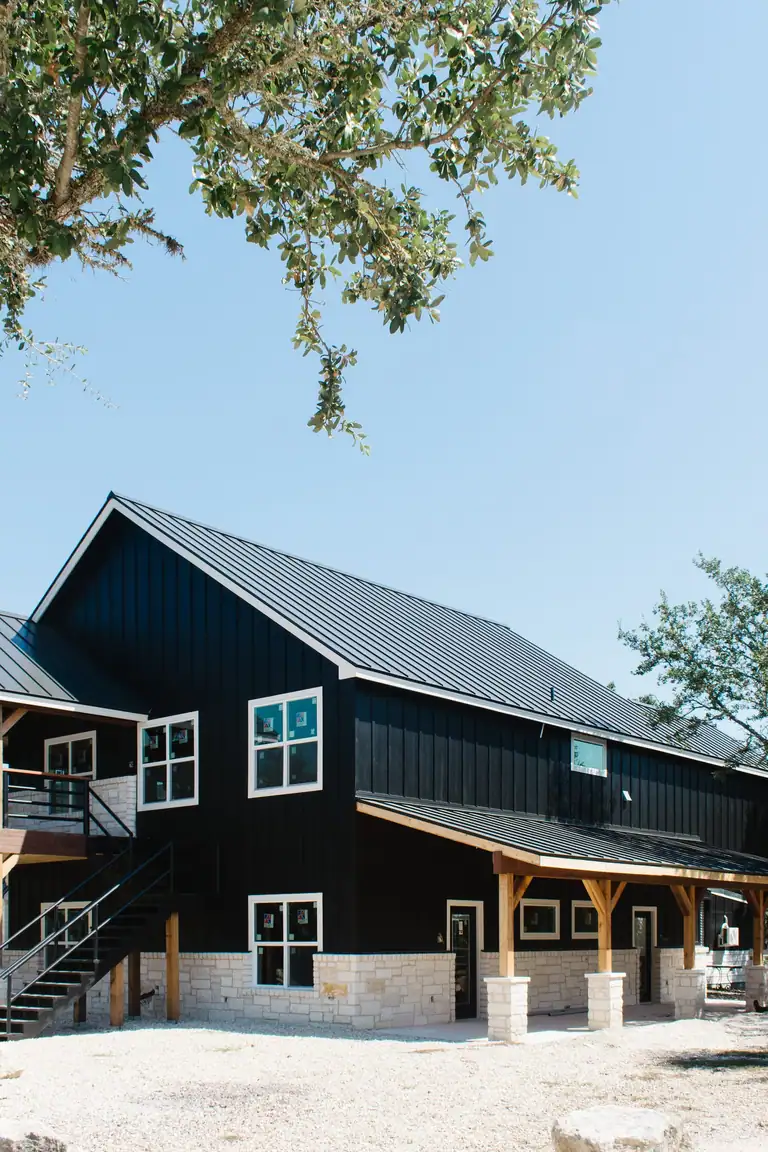
Hill Country Modern: Blending Rustic Charm with Contemporary Design

Custom home exterior by Ridge Rock Builders in Texas Hill Country

If you love the soul of a Texas ranch but also want a home that feels open, clean, and current, Hill Country modern home design is where those two worlds meet. It respects the land and the materials that have been here for centuries — limestone, cedar, steel — while embracing the open sightlines, natural light, and thoughtful systems that define how people want to live today. Done right, it looks like it has always belonged on that hillside. Here is how to approach it.

What Defines Hill Country Modern Design

Hill Country modern is not a style you pick from a catalog. It is a design philosophy rooted in the land, the climate, and the local materials available. The best examples share a few defining characteristics that set them apart from both generic farmhouse builds and cold, glass-and-steel contemporary homes.

Material Honesty

The palette stays grounded in what is native and natural: limestone, stucco, steel, cedar, white oak, concrete. These materials are chosen not because they are trendy but because they sit comfortably in the Hill Country landscape and age beautifully with minimal upkeep. You will not find vinyl siding or fake shutters on a true Hill Country modern home.

Simple, Calm Geometry

Gabled or low-slope roofs. Clean fascia lines. Minimal ornamentation. The form of the house is composed and quiet. This restraint is actually harder to execute than it looks — it requires every detail to be right because there is nowhere to hide behind ornate trim or busy facades.

Connection to Nature

Generous windows, doors that stack or pocket entirely into the wall, breezeways, and deep covered porches. The house is designed to frame views, catch prevailing breezes, and blur the line between inside and outside. This is not just an aesthetic choice — it is how you make the most of a Hill Country property. To see this philosophy applied to a completed build, browse our project gallery.

Exterior Moves That Actually Matter

The exterior of a Hill Country modern home does the heavy lifting. It sets the tone for the property and has to perform well in a climate that serves up extreme heat, violent storms, and wide temperature swings — sometimes in the same week.

Stone Plus Steel

This is the signature combination. Warm limestone or chopped Lueders paired with black or dark galvanized steel accents creates a palette that is simultaneously rugged and refined. Exposed steel lintels above windows, steel pergola posts, or steel railings on a second-story balcony add an industrial note without making the home feel cold.

Standing Seam Metal Roof

Standing seam metal is the right roof for this climate, full stop. It sheds water fast during heavy storms, resists hail better than shingles, and lasts two to three times as long. Visually, the clean vertical seams reinforce the crisp lines that define the style. Choose a lighter to medium tone — charcoal, weathered zinc, or a warm bronze — to manage heat gain. Matte black looks sharp but will hold more heat in direct sun.

Porches Designed to Be Used

A porch that is only 6 or 8 feet deep is essentially decorative. For a porch to function as a real living space, you need a minimum of 12 feet — and 14 to 16 feet is better. That gives you room for a seating arrangement, a dining table, and clearance to move comfortably. At proper depth, the porch also shades the glass behind it, which directly impacts your cooling load in summer.

Interior Architecture That Feels Timeless

The interior of a Hill Country modern home is where restraint pays off most. The temptation is to layer in too many styles or too many statement pieces. The homes that hold up over time are the ones built around texture, proportion, and light — not trends.

Open Core with Cozy Pockets

A large, connected living, kitchen, and dining zone forms the social center of the home. But all that openness works better when balanced with smaller, defined spaces — a reading nook tucked under a staircase, a window bench looking out to a courtyard, a study with a door that actually closes. People want to gather and they want to retreat. Good floor plans allow both.

Natural Light from Multiple Directions

One of the most common mistakes in residential design is lighting rooms from only one direction. When you place windows on at least two sides of a room, you eliminate harsh shadows and give the light depth that changes beautifully throughout the day. Clerestory windows above rooflines, skylights over bathrooms, and light wells in interior corridors are all techniques worth considering in tighter floor plans.

Texture Over Trend

Wire-brushed white oak floors. Hand-troweled plaster walls. Soapstone or honed quartzite counters. Leathered granite at the outdoor kitchen. These finishes have tactile richness that photographs do not fully capture. More importantly, they wear beautifully — minor scratches and patina become part of the character rather than flaws to repair. This is the opposite of polished surfaces that show every fingerprint and require constant maintenance.

Systems and Performance

A beautiful Hill Country modern home that does not perform in Central Texas summers is a failed project. Systems and performance have to be designed in from the start — not bolted on as an afterthought. This is something we discuss in detail in our post on why Ridge Rock homes stand the test of time.

Thermal Fundamentals

  • Spray foam insulation at the roof deck and exterior walls — creates a continuous thermal envelope
  • Low-E glazing on all windows and doors — blocks infrared heat while maintaining views
  • Proper roof overhangs sized for your site’s latitude and orientation
  • Zoned HVAC so different parts of the house can be conditioned independently

Acoustics

Vaulted ceilings are a hallmark of Hill Country modern design — and they also echo. Hard surfaces everywhere create a room that sounds like a gymnasium. Counter this with area rugs on stone or wood floors, wood slat ceilings or acoustic panels that blend with the design, drapery pockets even if you do not always use curtains, and upholstered furniture in social areas.

Low Maintenance Exteriors

Choose exterior finishes that patina gracefully and require minimal upkeep over time. Metal, stone, and high-quality stucco are the right answers for the Hill Country climate. Fiber cement siding where appropriate. Avoid wood siding that will need repainting every few years — especially on south and west-facing walls that take the hardest sun.

Floor Plan Priorities

The layout of a Hill Country modern home should flow naturally from the land it sits on. Before a floor plan is drawn, we walk the property to understand views, breezes, sun angles, and natural features. The home should be positioned to take advantage of all of that — not just dropped onto the site for convenience.

True Indoor-Outdoor Flow

A 12 to 16-foot opening between the main living area and the back porch changes the way you use your home. Multi-slide or pocket door systems allow this wall to disappear entirely on good weather days. The key is detailing the threshold correctly — a flush or low-profile transition that does not create a trip hazard and handles water during storms.

Mudroom and Utility Spine

Families moving to acreage in Dripping Springs or Driftwood generate a lot of outdoor gear. A proper mudroom — with lockers, a bench, hooks, cubbies, and a utility sink — is the buffer between the outdoors and the rest of the house. Position it off the garage entry or a side door, not the formal front entrance.

Owner’s Wing Privacy

In a one-story Hill Country modern home, the primary suite should be separated from the children’s or guest bedrooms by more than a hallway. A short gallery, a courtyard connection, or even a breezeway that frames a view creates the physical and acoustic separation that makes a primary suite feel like a true retreat rather than just a larger bedroom.

Common Mistakes to Avoid

We see the same mistakes come up repeatedly in Hill Country modern builds — even beautiful ones. Knowing these in advance saves money, comfort, and regret.

Too Much Glass on the West

The western exposure in Central Texas gets punishing afternoon sun from May through October. Large expanses of west-facing glass will drive up your cooling costs and make those rooms uncomfortable regardless of your HVAC system. Shift your major openings to the south — where overhangs can shade them effectively — and the east, where morning light is gentle and does not generate heat.

Porches That Are Too Narrow

If furniture does not fit comfortably on a porch with room to move around it, people stop using it. A 6-foot porch is a hallway, not an outdoor room. Build the porch you will actually use. The extra concrete and roofing cost is trivial relative to the value of outdoor living space in this climate.

Random Rustic Elements Without a Coherent Plan

A barn door here, a shiplap accent wall there, and some rope lighting does not constitute a design strategy. Hill Country modern works because it is restrained and cohesive. Commit to a palette — a specific stone, a metal finish, a wood tone — and hold to it across the entire home. The discipline is what makes it feel curated rather than assembled.

The Ridge Rock Builders Approach

We start every Hill Country modern project by walking the land with the client. We identify the views worth framing, the prevailing breezes to catch, the slope and drainage to work with rather than against. The home is then massed to create shade where you need it, capture light at the right hours, and sit on the land the way it always should have been there.

Materials are selected for beauty and longevity together — never one without the other. The result is a home that feels grounded, simply detailed, and quietly luxurious without ever trying too hard. If you have land in mind and a rough sense of what you want, reach out. Bring a sketch and a few photos. We will help you shape a plan that fits both the site and your life.

You can also read about our full process from blueprint to move-in to understand how a project like this comes together from start to finish.

Frequently Asked Questions

What is the difference between Hill Country modern and farmhouse style?

Farmhouse style emphasizes decorative elements — shiplap, board and batten, vintage fixtures, and a warm, cluttered aesthetic. Hill Country modern is more restrained: it uses authentic local materials, clean geometry, and a direct connection to the natural landscape. It is less about decoration and more about the relationship between the home and its site. The result feels sophisticated rather than nostalgic.

What materials are most commonly used in Hill Country modern homes?

Native limestone is the foundation of the exterior palette in most builds. Standing seam metal roofing, steel window frames and structural accents, white oak flooring, hand-troweled plaster walls, and concrete or natural stone countertops complete the picture. These materials all share one quality: they age well and require minimal maintenance in the Hill Country climate.

How much does a Hill Country modern custom home cost to build?

It depends heavily on size, site conditions, and the specific finishes and systems you choose. The materials that define this style — stone, steel, quality glazing — are not the cheapest options, but they are long-term investments rather than expenses. For a realistic number based on your specific plans and land, use our free build cost estimator to start the conversation.

Can Hill Country modern design work on a smaller lot?

Yes. The principles scale down without losing integrity. A 2,000-square-foot Hill Country modern home on a half-acre can be just as compelling as a 4,500-square-foot estate on 10 acres. The key is focusing on proportions, quality materials, and a strong indoor-outdoor connection — even on a modest lot, a well-placed covered porch and smart window placement make a huge difference.

How does Hill Country modern handle the heat?

This style is inherently well-suited to the climate when built correctly. Deep porches shade glass on the south and east. Proper overhangs on west-facing windows reduce afternoon heat gain. Standing seam metal roofs reflect solar radiation. Spray foam insulation creates a tight thermal envelope. And zoned HVAC keeps different areas of the home comfortable without running the whole system constantly.

Does Ridge Rock Builders specialize in Hill Country modern design?

It is one of the styles we build most frequently in Dripping Springs, Wimberley, and surrounding areas. We work with architects and designers who understand this aesthetic, or we can connect you with our design partners. The most important thing is a builder who understands the climate performance requirements — not just the look. Here’s how to choose the right builder for a project like this.

Ready to Start Your Project?

At Ridge Rock Builders, we specialize in custom homes, remodels, barns, shops, and casitas throughout the Texas Hill Country. Whether you’re still exploring your options or ready to break ground, we’d love to talk.

Get a free build estimate or call us at (512) 294-9579 to start the conversation.

Leave a Reply

Your email address will not be published. Required fields are marked *