
You’ve decided to build a custom home. Congratulations — and also, we get it if you’re feeling a little overwhelmed. Most people who come to us have bought and sold houses before, but they’ve never been on this side of the process. They know what move-in day feels like, but they have no idea what happens between “I want to build” and the moment you get your keys. This post walks you through every major phase of the custom home building process in Texas, so you know exactly what to expect and when.
Phase 1: Pre-Construction — Getting Your Ducks in a Row
Before a single shovel goes in the ground, there’s a lot of groundwork to lay. This phase typically runs 2–4 months and covers everything from finding land to finalizing your plans. Here’s what’s happening during that time:
Site Selection and Due Diligence
If you don’t already own land, this is step one. In the Hill Country — areas like Dripping Springs, Wimberley, Driftwood, and Spicewood — lot quality varies enormously. Slope, rock, tree coverage, utility access, and county setback rules all affect buildability and cost. We always encourage buyers to have a builder walk the lot with them before they close on it. A bad lot can add $50,000–$150,000 to your build cost or, in some cases, make a project unfeasible altogether. Read our guide on choosing the right lot for more detail on what to look for.
Design and Architecture
Once you have your land, you need plans. Some clients come to us with a full set of architect-stamped drawings. Others come with ideas on a napkin. Either way, this is where your vision starts taking shape — square footage, number of bedrooms and bathrooms, garage configuration, outdoor living areas, and all the details that make a house feel like yours. Depending on complexity, design typically takes 6–12 weeks.
Budgeting and Pre-Construction Estimate
As plans develop, we build out a detailed cost estimate. In Hays County and the surrounding Hill Country, construction costs generally run $250–$425 per square foot for a custom home, depending on finish level, structural complexity, and site conditions. This is the phase where we align your wish list with your budget and make smart tradeoffs if needed. Get a free build estimate to start that conversation with us.
Phase 2: Permits and Approvals
Before construction begins, your project needs to be reviewed and approved by the relevant governing body. In unincorporated Hays County, that means county permits. If you’re building inside city limits — say, Dripping Springs proper — you’ll go through the city’s permitting office. Permit timelines in the Hill Country currently run 4–10 weeks, depending on the jurisdiction and the complexity of your project. We handle all of this on your behalf.
- Residential building permit: Required for all new construction
- Septic permit: Required in most rural Hill Country areas not served by municipal sewer
- Well permit: If you’re not connecting to a water utility
- Tree removal or impervious cover review: Some jurisdictions require this, especially in ETJs
- HOA approval: Required if your property is in a neighborhood with deed restrictions
Don’t be alarmed by the list. Most of these run concurrently, and experienced builders know exactly how to sequence them to minimize delay.
Phase 3: Site Work and Foundation
This is when the job site starts to look like something. Site work typically begins 1–2 weeks after permits are issued and involves:
- Clearing and grubbing (removing trees, brush, and root systems from the building envelope)
- Rough grading to establish drainage patterns
- Utility trenching for electric, water, and sewer/septic lines
- Foundation excavation — in the Hill Country this often means cutting into caliche or limestone, which affects cost and timeline
- Form-setting and pouring your concrete slab (or pier-and-beam installation, if that’s the engineering solution for your site)
Foundation work in rocky Hill Country terrain takes longer than it does on flat, sandy soil. Budget 3–6 weeks for this phase. The foundation inspection — which happens before you pour — is one of the most important stops along the way. Nothing goes up until the inspector signs off.
Phase 4: Framing and Rough-In
Once the slab is cured, your home starts going vertical. Framing is the phase most people associate with real progress — walls, floors (if there’s a second story), and roof structure come together fast. A well-organized framing crew can frame a 2,500–3,500 square foot home in 3–5 weeks.
Running right behind framing are the rough-in trades:
- Rough plumbing: All drain lines, supply lines, and stub-outs placed before walls close
- Rough HVAC: Ductwork, equipment pads, and rough air handler placement
- Rough electrical: Panel location, wire runs, outlet and fixture boxes
- Low voltage and data: Speaker wire, ethernet, security conduit — anything that needs to live in the walls
Rough-in inspections follow each trade. No drywall goes up until everything has been inspected and approved.
Phase 5: Insulation, Drywall, and Finishes
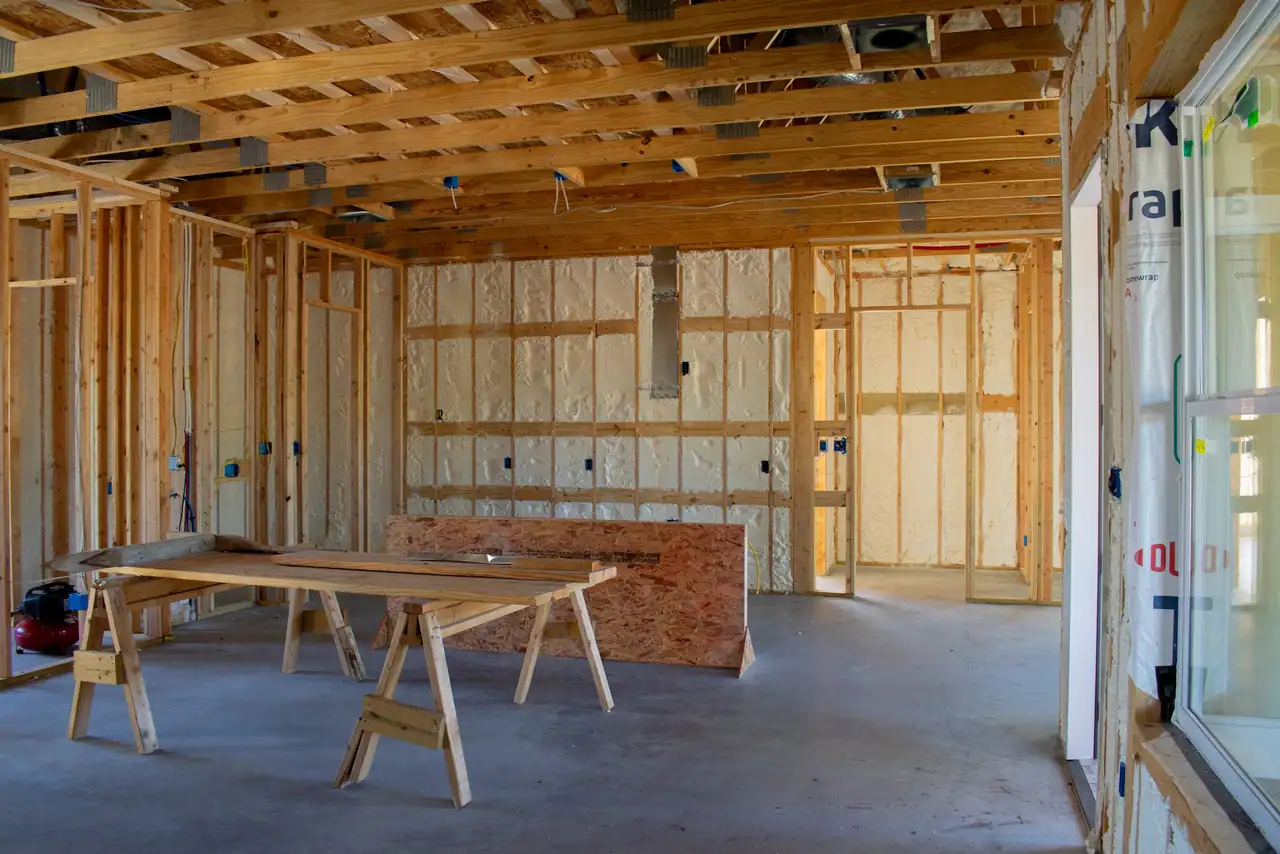
After rough inspections pass, the home starts looking finished — quickly. Insulation goes in (spray foam is common in the Hill Country for its thermal performance in Texas heat), then drywall, tape, texture, and paint. From there, the finish sequence typically flows like this:
- Interior doors and trim
- Tile work — floors, showers, backsplashes
- Hardwood or LVP flooring installation
- Cabinet installation
- Countertop templating and installation
- Plumbing and electrical trim-out (fixtures, outlets, switches)
- Appliance delivery and installation
- Hardware — door handles, cabinet pulls, towel bars
- Exterior finishes — stone, stucco, siding, and exterior trim
This phase runs roughly 10–16 weeks depending on the size of the home and the complexity of the finishes. Custom tile work, natural stone, and specialty millwork all take longer than standard finishes. Plan accordingly.
Phase 6: Final Inspections, Punch List, and Closing
As the home nears completion, your builder schedules final inspections with the county or city. These cover electrical, plumbing, HVAC, and a final building inspection. Once you pass, a Certificate of Occupancy (CO) is issued — that’s the official green light to move in.
Before closing, your builder will walk through the home with you on a formal punch list walkthrough. This is where you note anything that needs touch-up, adjustment, or correction. A good builder takes this seriously. At Ridge Rock, we don’t consider a project closed until the punch list is complete — not just started.
From first permit to CO, a typical custom home in the Hill Country takes 10–16 months depending on size, finishes, and permit jurisdiction. Larger or more complex projects can run 18 months or more. Anyone telling you it can be done start-to-finish in six months on a fully custom home is either not doing it custom, or they’re going to cut corners to hit that timeline.
If you’re ready to explore building a custom home in Dripping Springs or anywhere in the surrounding Hill Country, we’d love to talk through your project. Learn more about our process and past builds on our blog.
Frequently Asked Questions
How long does it really take to build a custom home in Texas?
Plan for 10–16 months from permit application to Certificate of Occupancy for a typical custom home in the Hill Country. Add 2–4 months for pre-construction (design, budgeting, and land due diligence) and you’re looking at 12–20 months from first conversation to move-in. Complex projects — large square footage, high-end finishes, difficult terrain — can run longer. We’ll give you a realistic timeline estimate early in our process, not an optimistic one.
Do I need to hire an architect before talking to a builder?
Not necessarily. Some clients come to us with full architectural plans; others start with just an idea. We work with outside architects and also offer design-build coordination. If you don’t have plans yet, we can help you figure out the right path based on what you’re trying to build and your budget.
What’s the first step to getting started with Ridge Rock Builders?
The best first step is a conversation. You can request a free estimate or call us at (512) 294-9579. We’ll talk through your land situation, your program (what you want to build), and your budget range, then give you an honest picture of what’s possible and what the process looks like from here.
What’s included in the price per square foot I keep hearing about?
It depends on who’s quoting it. Some builders quote a per-square-foot number that excludes the lot, site work, septic, well, and landscaping. Others include more. We itemize everything so you know exactly what you’re getting. In the Hill Country, all-in construction costs (excluding lot) typically run $250–$425/SF depending on finish level and site complexity. Always ask what’s included before comparing quotes.
Can I make changes during construction?
Yes, but changes cost money and can delay your timeline — especially after certain phases. A change in the design phase is inexpensive. A change after framing is moderate. A change after rough-in is expensive. A change after drywall is very expensive. We have a clear change order process that keeps everything documented and priced before any work changes. We’ll be upfront with you about the cost and schedule impact of any modification.
What makes building in Hays County different from building inside Austin city limits?
Hays County unincorporated land (which covers a lot of the Dripping Springs area) has county-level permitting rather than city permitting. The process is generally simpler and faster than building inside Austin city limits, and there are fewer regulatory restrictions. That said, areas that fall inside Dripping Springs’ ETJ (extraterritorial jurisdiction) or city limits have their own rules. We know the difference and will help you navigate whatever jurisdiction your land falls in.
Ready to Start Your Project?
Building a custom home is one of the biggest decisions you’ll make — and one of the most rewarding. We’ve guided homeowners through this process all across the Hill Country, from Dripping Springs and Driftwood to Wimberley and Bee Cave. When you’re ready to get specific, we’re here.
Get a free build estimate or call us at (512) 294-9579. Let’s talk about what you’re trying to build.


